
Seedance vs Wan vs Kling: pick by the job
Published on October 31, 2026 Updated October 31, 2026 8 min read
Choose Seedance, Wan, or Kling by job: long takes and start/end frames, multimodal references, or short social clips. Decide the task first, then open the model page—fewer wasted regenerations.
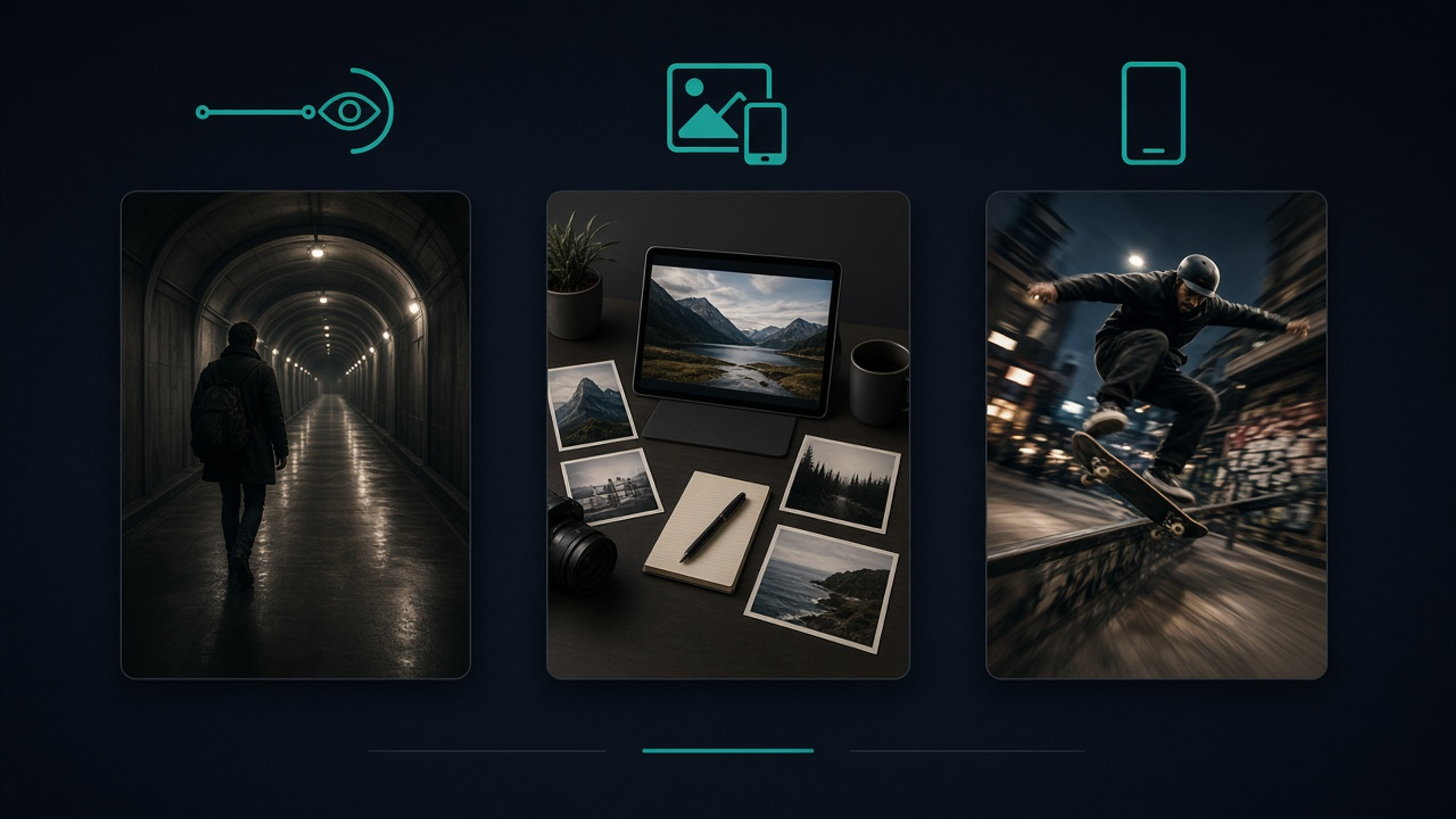
Seedance vs Wan vs Kling—start with the job, not the brand name. Do you need a longer one-take, a voiced short, start/end-frame control, or multimodal references? All three families can run text-to-video and image-to-video; they differ in duration bands, reference depth, and iteration cost. Pick the task, then open the matching model page and verify parameters.
Input mode first, family second
| Your starting point | Mode first | Then consider |
|---|---|---|
| Text idea only | Text-only (t2v) | Any family; short tests first |
| Locked character/product still | First frame (i2v) | Seedance / Wan for shape; Kling for short pacing |
| Known open and close frames | Start + end | Seedance 2.5, Wan 3.0, and other start/end-capable models |
| Same identity across shots | Multimodal reference (r2v) | Wan, Seedance, Kling O3 where r2v is open |
Mode details: text-to-video vs image-to-video. Below is family routing only.
One table: route by job
| Job | Try first | Why (workflow) | On-site entry |
|---|---|---|---|
| 4–30s continuous take, start/end transition | Seedance 2.5 | Longer singles + first/last frames + audio is the core combo | Seedance 2.5 |
| Many refs, optional audio, cost-aware iteration | Wan 3.0 (drafts: Wan 2.7) | Full text / first-frame / reference-to-video path | Wan 3.0 |
| 3–15s social clip, Kling look | Kling 3.0 Turbo or Kling O3 | Turbo for fast shorts; O3 for higher fidelity / r2v | Kling 3.0 Turbo, Kling O3 |
| Prove motion cheap, then upscale | Seedance Fast/Mini or lower Wan resolution | Same prompt; upgrade resolution inside the family | Resolution / tier on the model page |
Mnemonic: long take & endpoints → Seedance; refs & iteration → Wan; short Kling feel → Kling.
What each family is for
Seedance: long takes, start/end, narrative pace
Use for one-take ads, known endpoint transitions, and continuous clips that need synced audio. Keep the five-part prompt; on image-to-video, write the transition—not the face. If identity already drifts, fix references via face-drift triage before you stretch duration.
Wan: reference depth and cheap trials
Use when images, video clips, or other materials already constrain the shot, or when you want low-resolution camera tests before a clean render. Align motion with seconds in camera move and duration. Keep reference sets coherent per reference-frame consistency.
Kling: short pacing and two clear lanes
- Kling 3.0 Turbo: fast 720p/1080p shorts to test rhythm.
- Kling O3: step up for higher fidelity or reference-to-video.
Always spot-check edges; product shots should start from a first frame, not pure text gambling.
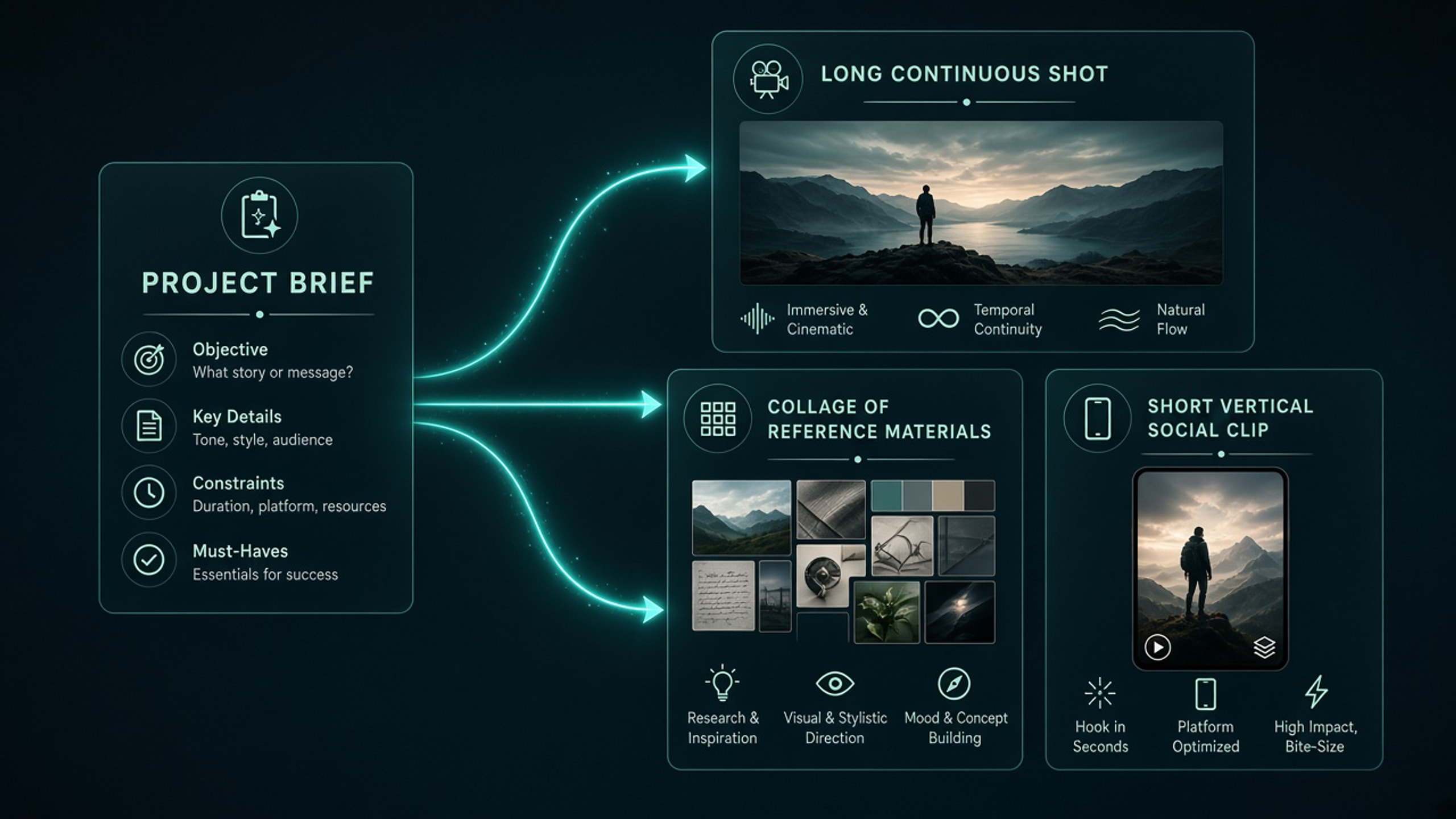
Practical order (fewer regenerations)
- Write the brief: seconds, must-lock face/pack, start/end stills or not.
- Lock t2v / i2v / start+end / r2v.
- Pick a family from the table; confirm duration and reference caps on the model page.
- Run a short, low-stress clip; then extend or add camera.
- Before paid use, skim the commercial checklist.
Wrap-up
Seedance, Wan, and Kling are three toolchains—not a single leaderboard. Job → input mode → family; quotes and limits come from the live create form. Browse the models hub, then A/B the same prompt across families on a short test.
FAQ
Is one of Seedance, Wan, or Kling best overall?
No. Match the job: long takes and start/end frames → Seedance; multimodal refs and cheaper iteration → Wan; short Kling-style clips → Kling O3 or 3.0 Turbo. Always confirm limits on the live model page.
Pick the model family or text/image mode first?
Pick the input mode first (text-only, first frame, start+end, multimodal reference), then the family. The wrong mode wastes regenerations on any name.
I need a 20–30s one-take. Who first?
Start with Seedance 2.5 or Wan 3.0 on routes that advertise longer single clips. Prove the shot short, then extend. Caps follow the studio controls.
What about a 5–15s social clip?
Try Kling 3.0 Turbo or Kling O3 first. When packaging must stay exact, use first-frame image-to-video and compare Seedance or Wan.
I have many reference images or a reference video.
Prefer Wan or Seedance tiers with multimodal reference (r2v). Kling O3 also offers reference-to-video—confirm the option is enabled for that model.
Should drafts and finals use the same model?
You can draft on a faster or lighter tier (Seedance Fast/Mini, lower Wan resolution), then upgrade within the same family once motion holds.
Share
Related posts
Text-to-video or image-to-video? Pick the input mode once
Choose text-to-video vs image-to-video by whether you have a locked still, need face or pack consistency, then map text-only, first frame, first+last, and multimodal reference.
WorkflowAI video face drift: diagnose and fix identity
Fix AI video face drift by symptom: within-clip morph, cross-clip mismatch, profile failure, or post-occlusion change. Adjust references, shorten duration, and lower motion—one change at a time.
WorkflowSora2 AI reference-frame consistency for people and products
Keep people and products consistent in Sora2 AI with first/last frames: when to use image-to-video, how to pick references, change one variable at a time.